2017 U.S. Pet Obesity Prevalence Survey
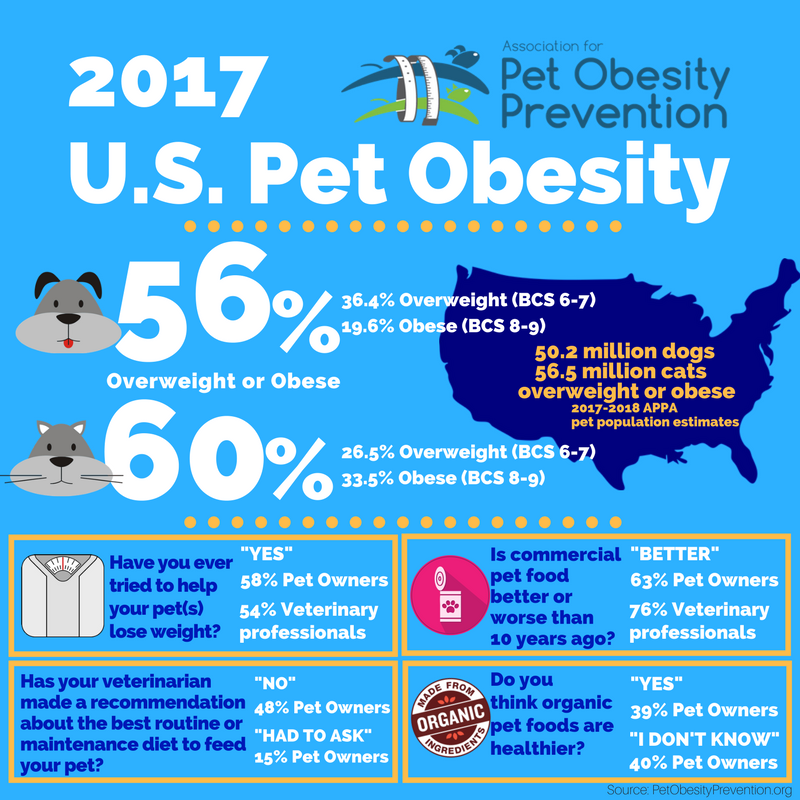
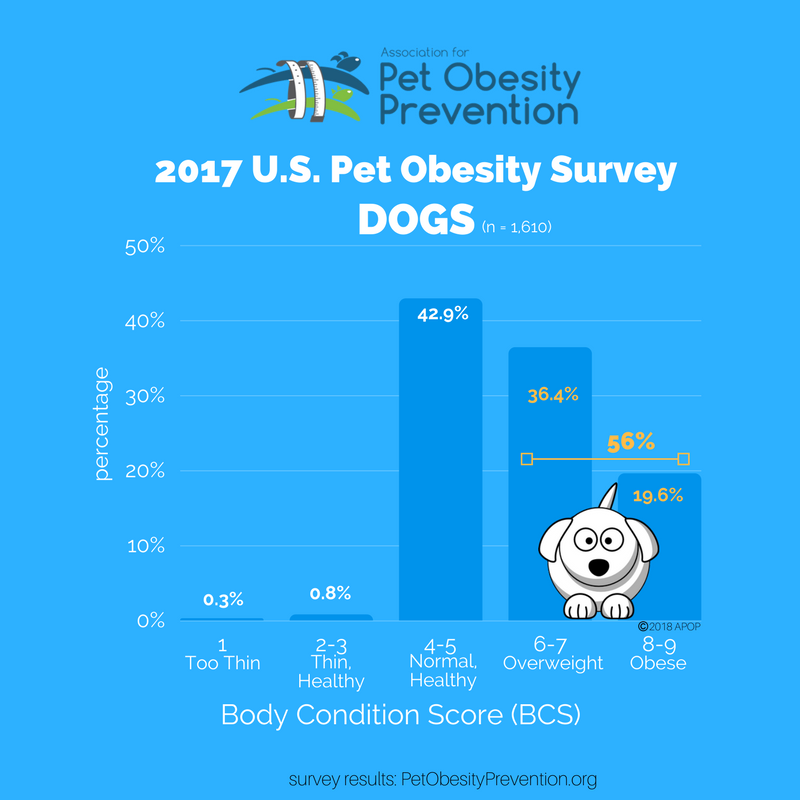
APOP’s 2017 clinic-based prevalence survey assessed body condition in dogs and cats using veterinary-assessed 9-point Body Condition Score. The survey found that 56% of dogs and 60% of cats were classified as overweight or having obesity.

Classified as overweight or having obesity. Based on 1,610 dogs evaluated.

Classified as overweight or having obesity. Based on 714 cats evaluated.
Dogs
n = 1,610Cats
n = 714Prevalence estimates are derived from veterinary-assessed BCS evaluations conducted during routine wellness exams at participating U.S. clinics. This survey is distinct from APOP’s annual opinion survey.
2017 APOP Pet Obesity and Nutrition Opinion Survey
The 2017 APOP Pet Obesity and Nutrition Opinion Survey is a cross-sectional survey assessing perspectives, awareness, and self-reported practices related to companion animal nutrition, weight management, and feeding behaviors among U.S. pet owners and veterinary professionals. Respondents reported on dogs and cats, including exercise habits, diet selection, and sources of dietary guidance. Findings reflect self-reported perceptions and behaviors rather than veterinarian-assessed body condition score (BCS).
- Weight loss efforts: 58% of pet owners and 54% of veterinary professionals reported attempting to help a pet lose weight. Calorie restriction and increased exercise were the most commonly reported strategies.
- Barriers to exercise: “Too busy” was the most frequently cited barrier, reported by over 25% of pet owners and 43% of veterinary professionals. Behavioral issues (21% vs 19%), limited access to exercise areas, and physical limitations of the pet or owner were also commonly reported.
- Diet recommendation gap: 48% of pet owners reported their veterinarian did not recommend a maintenance diet, and 15% stated they had to request a recommendation. In contrast, 50% of veterinary professionals reported routinely offering maintenance diet guidance.
- Perception of pet food quality: 63% of pet owners and 76% of veterinary professionals believed commercial pet food quality had improved compared to ten years prior.
- Perception of “people food”: 65% of pet owners and 67% of veterinary professionals considered feeding human food to pets to be unhealthy.
- Organic pet food: 39% of pet owners and 26% of veterinary professionals considered organic pet food to be healthier. Uncertainty remained high, with 40% of pet owners and 17% of veterinary professionals reporting “I don’t know.”
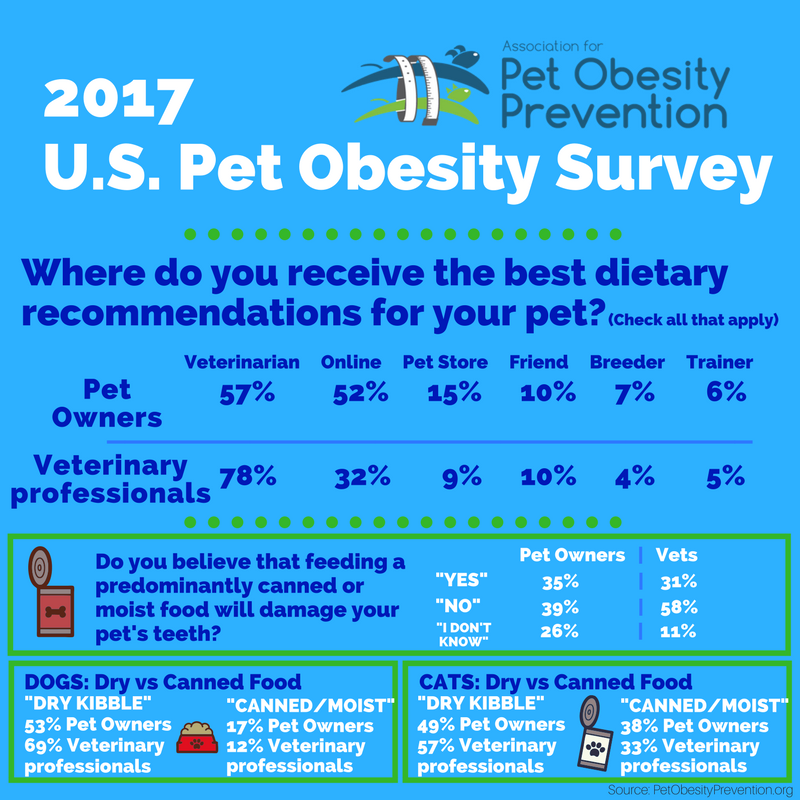
- Feeding practices: Dry food was the most commonly fed format for dogs (53% of pet owners, 69% of veterinary professionals). For cats, feeding practices were more evenly distributed between dry (49% vs 57%) and canned diets (38% vs 33%).
- Dental health confusion: Responses varied regarding whether canned diets negatively affect dental health. 35% of pet owners and 31% of veterinary professionals believed canned diets damage teeth, while 39% of pet owners and 58% of veterinary professionals disagreed.
-
Perceived healthfulness of diets and ingredients:
- Raw diets: 28% of pet owners and 13% of veterinary professionals considered them healthier; 28% vs 72% did not; 45% vs 15% were unsure.
- Low- or no-grain diets: 46% vs 21% considered them healthier; 12% vs 63% did not; 43% vs 16% were unsure.
- Corn (dogs): 5% of pet owners and 50% of veterinary professionals considered it a healthy ingredient; 63% vs 30% did not; 31% vs 20% were unsure.
- Corn (cats): 3% vs 34% considered it a healthy ingredient; 63% vs 46% did not; 34% vs 20% were unsure.
These findings highlight persistent differences between pet owners and veterinary professionals in perceptions of diet, exercise, and weight management, as well as continued uncertainty around pet food composition and health impacts.